Getting Started in Zero Parades
A 60-hour espionage CRPG opens with a phone call, a comatose body, and a market full of bootleg discs. Here is what you need to know before you sit down with it.
What is Zero Parades?
Zero Parades: For Dead Spies is ZA/UM's second game, the studio's first release since Disco Elysium. It is an espionage CRPG built on dice rolls, internal monologue, and a sprawling cast — same DNA as Disco, but the world is bigger, the protagonist is named, and the central mystery is intelligence work rather than amnesia. You play Hershel Wilk, cryptonym CASCADE, a burned operant pulled out of the Freezer (a bureaucratic gulag for failed spies) and sent back to Portofiro, the city-state where her career ended five years earlier. The studio cites le Carré and Park Chan-wook as the tonal references, and it shows.
The first 30 minutes
The game opens in a Superbloc safehouse. PSEUDOPOD — Hershel's old control — is catatonic on the floor, ruined by something he heard on a red disc he should not have played. You wake up, take stock, and figure out you are not in the Freezer anymore. The Operant Bureau wants you back in the field, on a case nobody else can run. The disc that wrecked PSEUDOPOD becomes Exhibit A.
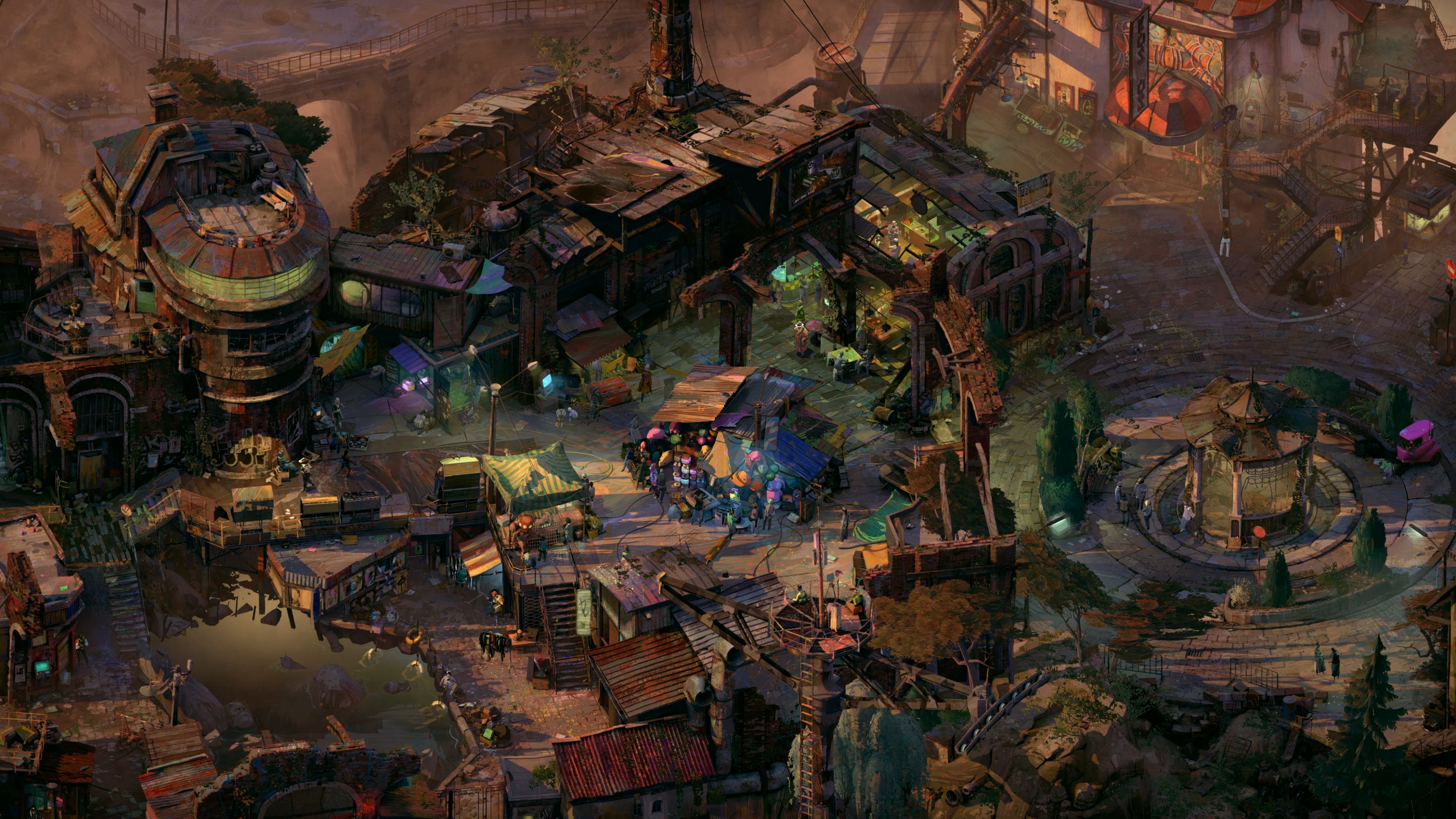
From the safehouse, the tutorial walks you into the Quisach district of Portofiro — specifically the Bootleg Bazaar, a former silk factory turned open-air market. You will meet the Bazaar GM, watch the Subcomandante Bagman rant from a TV screen, and start picking at the loose threads that lead you to the rest of the Whole Sick Crew — the network you betrayed in '91.
Pick your preset
Three preset builds plus a custom option. You can change skill point allocation later, so do not agonize. Each preset spends 45 points across 15 skills, plus one bonus point per faculty.
- Kinetic — "Iron Maiden." Physical, violent, emotionally illiterate. Action 4 / Relation 2 / Intellect 3. Pick this if you want fights to end quickly and conversations to end faster.
- Charismatic — "Neighborhood Darling." Reads rooms, runs cons, terrible at math. Action 3 / Relation 4 / Intellect 2. Pick this if you want to talk your way through.
- Analytical — "Human calculator." Big brain, glass jaw. Action 2 / Relation 3 / Intellect 4. Pick this if you want the world to leak details at you and you can live with losing the occasional fistfight.
For a deeper breakdown of each preset's opening kit, see the Builds guide.
Core systems at a glance
- Skill checks — 2d6 plus modifiers against a target number. White checks can be retried; red checks cannot. Full details in the Skill Checks guide.
- Conditioning — Thoughts Hershel internalizes for passive buffs and quirks. Each one carries a violation rule. Break the rule, lose the bonuses temporarily.
- Pressures — Fatigue, Anxiety, and Delirium. Exerting a skill (adding a third die to your pool) spikes the matching bar. Cap one and you lose a skill point as punishment.
- Dramatic Encounters — Tactical slices of time where decisions and dice carry real, permanent consequences. You will know one when it locks the camera and slows the music.
- Sol economy — Portofiro runs on Sol. You start poor and stay poor. Almost everything useful costs money you do not have, which is the point.
First-run tips
- You will fail more rolls than you succeed. The game is built for it. Remap Radio calls it "failing forward" — failed checks branch the story, they do not lock it.
- Do not exert every check. Adding a third die spikes the matching Pressure bar, and capping any Pressure costs you a skill point. Save exertion for rolls that actually matter.
- Sleep is free. So is the payphone dolphin in the Quisach Roundabout — squishing it gives a two-hour Blueprints and Technoflex buff and lowers Anxiety. Use it. (Source: Eurogamer review.)
- Buy consumables matched to your faculty: Rumba! Canned Coffee for Fatigue, Perro Pale for Anxiety, Suprema 100s for Delirium. Each trades one Pressure for another, so stock more than one type.
- Talk to everyone twice. The second pass after a story beat or a Thought change often opens dialogue that was not there the first time.
Where to go next
- Skill Checks guide — the dice math behind every choice.
- Builds guide — preset breakdowns and custom-build advice.
- Hershel Wilk (CASCADE) — the woman you are playing.
- PSEUDOPOD — the case that opens the game.
- What's Wrong, PSEUDOPOD? — the main thread.
- Operant Toolkit — the cipher, lockpicks, and camera you carry.